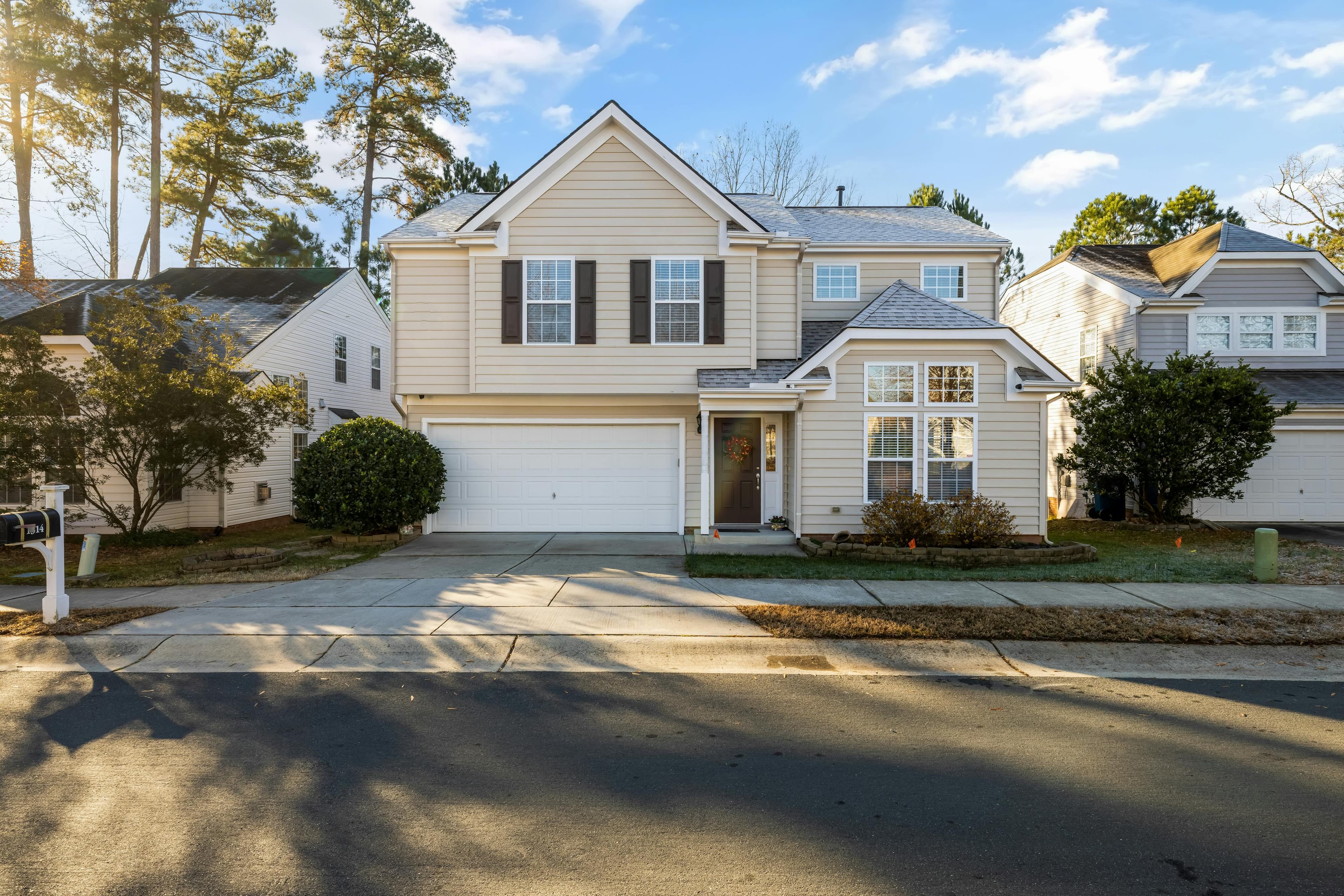


- Not all designations are equal: National Register listing carries almost no restrictions on a private owner, while a local landmark or historic district can control what you do to the outside of the house.
- The famous 20% tax credit is not for you if you live there: the federal Historic Rehabilitation Tax Credit only applies to income-producing buildings, so a buyer planning to occupy the home cannot use it.
- A preservation easement is forever: if a prior owner donated one, it runs with the deed and restricts every future owner's exterior changes in perpetuity.
- The buyer-pool effect goes both ways: designation adds cachet and stability in some markets and price tiers, and it scares off renovators and some lenders in others.
- Disclose the paperwork, not just the plaque: easements, design-review rules, and past approvals belong in your disclosure package so the deal does not fall apart in underwriting.
First, figure out which designation you actually have
The word "historic" covers two completely different legal situations, and the difference decides how you sell the house. Sellers routinely confuse them, and buyers get scared by rules that do not apply.
The first is listing on the National Register of Historic Places, the federal honor roll run by the National Park Service. This one sounds heavy and is actually light. Listing in the National Register places no federal restrictions or requirements on a private property owner. You may do with the property as you wish, within the framework of local laws or ordinances. The federal regulation says the same thing in plainer terms: listing of private property on the National Register does not prohibit under Federal law or regulation any actions which may otherwise be taken by the property owner with respect to the property. In other words, if you pay for the work with your own money, federal listing does not stop you from replacing windows, adding on, or even demolishing.
The second situation is local designation: a city landmark, or a home inside a locally designated historic district or overlay zone. That is a zoning tool with teeth. This is the layer that controls your exterior, and it is the one a buyer needs to understand before they write an offer.
Pull your paperwork first. Ask your city's planning or historic preservation office in writing whether the property is a local landmark, sits in a local district, or is only on the National Register. Get it in writing so you can hand it to buyers and quiet the rumor mill.
What a local historic district actually restricts
Local designation is different because a city council created it and a local preservation commission enforces it. Local historic district designation is a zoning overlay that creates real legal restrictions, created by city councils and administered by local historic preservation commissions. When a property is in a locally designated historic district, exterior changes visible from public rights-of-way typically require a Certificate of Appropriateness from the local historic preservation commission before any work begins.
That approval, the Certificate of Appropriateness (COA), is the mechanism a buyer will live with. The reviews are not abstract. In one Massachusetts city, the types of alterations reviewed include exterior remodeling, additions, and demolition of any structure, plus replacing siding and roof material as well as doors and windows. Materials get scrutinized closely: vinyl windows face significant restrictions in most historic districts, and while some commissions may approve vinyl for rear facades or secondary structures, they are rarely acceptable for primary street-facing elevations because the material cannot replicate the fine details and proportions of historic windows.
Two things typically fall outside the commission's reach: the interior, and features not visible from the street. That distinction matters when you market the home. A buyer can usually gut and modernize the kitchen freely while the front facade stays protected. Say so plainly, because most buyers assume the rules are stricter than they are.
What review does not replace
Design review sits on top of your normal permitting, it does not stand in for it. These standards work alongside zoning, building codes, fire regulations, accessibility requirements, and sign ordinances, and historic district review does not replace those systems, so a project may need both a Certificate of Appropriateness and a building permit. A buyer who wants a big addition is looking at two approval tracks, not one. Set that expectation early. If your home also carries older systems common in old houses, our guide to selling a house with knob-and-tube wiring or an old fuse box covers how to handle those on top of the historic layer.

A historic home needs an agent who has sold one
Design-review rules, easements, and a narrower buyer pool all reward experience. We match you with local agents who have actually closed designated properties in your market.
Find a historic-home specialistPreservation easements: the restriction that follows the deed forever
If a previous owner donated a historic preservation easement (sometimes called a facade easement), that is the single most important thing on your title for a buyer to understand. Unlike district rules, which change if the ordinance changes, an easement is a private, permanent contract recorded against the property.
A historic preservation easement is a voluntary legal agreement made between a real property owner and a qualified easement-holding organization to protect an historic property by restricting future changes to or development of the property in perpetuity. The practical effect on a buyer is ongoing oversight: the easement does not prevent all changes, but requires that exterior changes receive prior approval from the historic trust to which it was donated, ensuring that exterior changes are consistent with the original architectural style.
Why did the prior owner sign up for that? A tax deduction. The donor of a facade easement may be entitled to claim a charitable contribution deduction equal to the fair market value of the easement, normally determined by the "before and after" method. That is a real benefit to the person who donated it, but the deduction is spent and gone. The buyer inherits the restriction with no tax upside, so treat it as a permanent condition of ownership, not a perk.
Order a title search early. An easement is recorded in county records and will surface in title work anyway. Find it before your buyer's underwriter does, get a copy of the exact restrictions from the holding organization, and put it in your disclosure packet. Surprises at underwriting kill deals. Our overview of what sellers must disclose by state and category can help you build that packet.
The tax credits you can point to, and the catch for homeowners
Sellers love to advertise "eligible for historic tax credits." Be careful. The headline federal program is narrower than the marketing suggests, and using it wrong sets a false expectation that blows up during due diligence.
Here is the core rule. The amount of the rehabilitation credit is equal to 20 percent of the qualified rehabilitation expenditures with respect to a qualified rehabilitated building. But that credit is for investment property, not a primary residence. The IRS rehabilitation credit rules require that the property must be income-producing and depreciable. The National Park Service, which co-administers the program, describes the same 20% credit for the rehabilitation of historic, income-producing buildings that are listed in or determined eligible for listing in the National Register of Historic Places.
So if your buyer intends to live in the house, they cannot claim the federal 20% credit for their own kitchen or roof. It only comes into play if the building is used as a rental, a bed and breakfast, an office, or another income use. There is a real detail beyond ownership use, too. To qualify, the rehabilitation must be certified as conforming to the Secretary of the Interior's Standards for the Treatment of Historic Properties, achieved through a three-part application reviewed first by the state historic preservation office and then by the National Park Service. It is not a quick write-off; it is a certified, staged project. You can read the program in the National Park Service's own 20% tax credit basics.
Where a homeowner-buyer can still find help
State programs are the more realistic incentive for an owner-occupant. In addition to the 20% federal credit, most states offer their own historic rehabilitation credits, with some ranging from 10% to as high as 50% of qualified costs. Rules vary widely, and a number of state programs do reach owner-occupied homes where the federal one does not. Point buyers to your State Historic Preservation Office rather than promising a specific dollar figure you cannot back up.
Market the incentive honestly. "This home may qualify for state historic rehabilitation credits; buyers should confirm with the State Historic Preservation Office" is truthful and still attractive. "Buy this and get a 20% tax credit" is not, if the buyer plans to live there.
How lenders and appraisers treat designated homes
Financing and valuation are where designation quietly complicates a sale, so plan for it.
Appraisal is the first pressure point. Comparable sales are the backbone of any appraisal, and a rare landmark in a neighborhood of ordinary houses can be genuinely hard to comp. That can produce a value that does not match your list price, which is a common reason deals stall. If that happens, our breakdown of a low appraisal and your four options walks through the fixes, and preparing for the appraisal helps you give the appraiser the historic context and recent comparable sales they need.
Insurance is the second. Replacing period materials to a commission's standard costs more than off-the-shelf products, which shows up in replacement-cost coverage. The National Park Service itself flags the issue and recommends property owners contact their state's insurance commissioners for any policy or position paper regarding insuring National Register-listed properties. A buyer who cannot bind affordable coverage cannot close, so it is worth having a quote ready.
The upside: the restriction that spooks a lender on paper is the same restriction that stabilizes a designated neighborhood's values over time. Underwriters are usually fine once they see the easement or district rules documented. Problems come from surprises, not from designation itself.
Does designation raise or narrow your buyer pool? An honest, market-by-market answer
This is the question that actually decides your outcome, and the honest answer is: it depends on your market and your price tier. Anyone who tells you designation is uniformly good or bad is selling you something.
Where designation is a selling point
In established, high-demand historic neighborhoods, especially on the East Coast and in walkable urban cores, buyers seek out the protection. They want assurance that the block will not be torn down and replaced with something incompatible. Here, designation attracts a passionate, well-qualified pool, and the design-review rules read as a feature that guards their investment.
Where designation narrows the pool
In markets where buyers prize renovation flexibility, or in lower price tiers where every dollar of upgrade cost matters, the rules read as friction. Flippers and gut-renovators often walk, because a commission can veto the vinyl windows or the second-story addition that made their numbers work. You lose that segment entirely, which can mean fewer offers and longer days on market.
Where the two designations diverge
A National-Register-only home markets almost like any other house, because a buyer keeps full control of private-money changes. A locally landmarked home is a different product: you are selling a lifestyle and a set of obligations, and your marketing has to screen for buyers who want exactly that. Match the pitch to the designation.
The takeaway for pricing: designation rarely moves value in a straight line. It concentrates demand among fewer, more committed buyers. Your job is to find them, not to hide the restrictions from everyone. If your house also reads as dated inside, the playbook in selling an outdated time-capsule house pairs well with a historic listing strategy.
Price it for the buyers who actually want the rules
The right agent knows which buyers in your market pay a premium for a protected facade and which ones walk. That local read is worth more than any national rule of thumb.
Compare top local agentsHow to price and market a designated home, step by step
Confirm the exact designation in writing
Get a written statement from your local planning or preservation office on whether the home is National-Register-listed, a local landmark, in a local district, or some combination. This one document prevents most buyer confusion.
Run a title search for easements
Look specifically for a recorded preservation or facade easement. If one exists, get the full restriction language and the holder's contact so a buyer can ask questions before, not after, going under contract.
Assemble a "designation packet"
District boundaries, the design guidelines, any past Certificates of Appropriateness, the easement (if any), and the State Historic Preservation Office contact. Hand it to every serious buyer. Read how to read a comparative market analysis so you can pressure-test your agent's pricing against real historic comps.
Get an insurance quote in advance
Ask a carrier to quote replacement-cost coverage on the home as designated. A ready quote removes a late-stage objection and reassures your buyer's lender.
Market to the right buyer, plainly
Lead with the character and the protection, name the interior freedom the buyer keeps, and be upfront about exterior review. You want to attract the buyer who wants the rules, not surprise one who does not.
Red flags to clear before you list
- Unpermitted exterior work in a local district. Changes made without a Certificate of Appropriateness can force a buyer to restore the feature. Disclose it and check whether it needs to be cured. Our guide to selling with unpermitted additions applies directly.
- Overstated tax-credit claims. Advertising the federal 20% credit to owner-occupant buyers is misleading, because that credit requires income-producing use. Correct the listing language now.
- An easement nobody mentioned. If a facade easement exists and is not disclosed, expect it to surface in title and rattle the buyer. Get ahead of it.
- An agent who has never sold a designated home. This is a specialty. Interview for it. Our list of 15 questions to ask a listing agent is a good starting point.
Frequently asked questions
Does being on the National Register stop me from selling or renovating?
No. As long as there is no federal money or permit involved, National Register regulations do not regulate the actions of private owners, who do not need federal permission to make alterations and can treat or dispose of the property however they choose. Local landmark or district rules are separate and can restrict exterior changes.
Can my buyer use the federal 20% historic tax credit on their home?
Only if they use the building to produce income. The building must be a certified historic structure, and the property must be income-producing and depreciable. An owner-occupant cannot claim it for their own residence, though some state programs are broader.
What is a Certificate of Appropriateness?
It is the local commission's sign-off for exterior work. A Certificate of Appropriateness is required for exterior alterations visible from the public right-of-way in a locally designated district. It applies before work begins and is separate from your normal building permit.
What is a preservation easement and does it transfer to me?
It is a permanent restriction. A historic preservation easement is a voluntary agreement between an owner and a qualified organization to protect the property by restricting future changes in perpetuity. It runs with the deed, so it binds every future owner, including your buyer.
Are there state historic tax credits my buyer might use?
Often, yes. Most states offer their own historic rehabilitation credits, with some ranging from 10% to as high as 50% of qualified costs. Rules and eligibility differ by state, so buyers should confirm the details with the State Historic Preservation Office rather than rely on a listing's promise.
Does a preservation easement change what I can deduct as the seller?
The deduction belonged to whoever originally donated the easement. The donor of a facade easement may be entitled to claim a charitable contribution deduction equal to the fair market value of the easement. If a prior owner already donated it, that benefit is used up; you and your buyer keep the restriction without a new deduction. Confirm your own situation with a tax professional.
Will designation hurt my sale price?
Not automatically. Designation tends to concentrate demand among fewer, more committed buyers rather than move price in one direction. In strong historic neighborhoods it supports value; in renovation-driven or budget-sensitive markets it can lengthen days on market by pushing out flippers. Local pricing expertise matters more than any rule of thumb.
The bottom line
Historic designation is neither the golden selling point nor the dealbreaker it gets made out to be. The honest version is narrower: figure out exactly which designation you hold, surface any easement before your buyer's underwriter does, tell the truth about the tax credits (income-producing only, at the federal level), and market to the specific buyer who wants a protected facade rather than hoping to fool one who does not. Do that, and the restriction that scares off casual shoppers becomes the reason your real buyer pays up. An agent who has closed designated homes in your market is the difference between a smooth sale and a deal that dies at underwriting.
Disclaimer: This article is for informational purposes only and should not be considered financial, investment, tax, or legal advice. Figures and rules are drawn from the Internal Revenue Service, the National Park Service, the federal regulations in 36 CFR Part 60, and state historic preservation offices, and they change over time and vary by state and locality. Confirm your specific situation with your State Historic Preservation Office, a qualified tax professional, and a real estate attorney. EffectiveAgents is a real estate agent matching service.