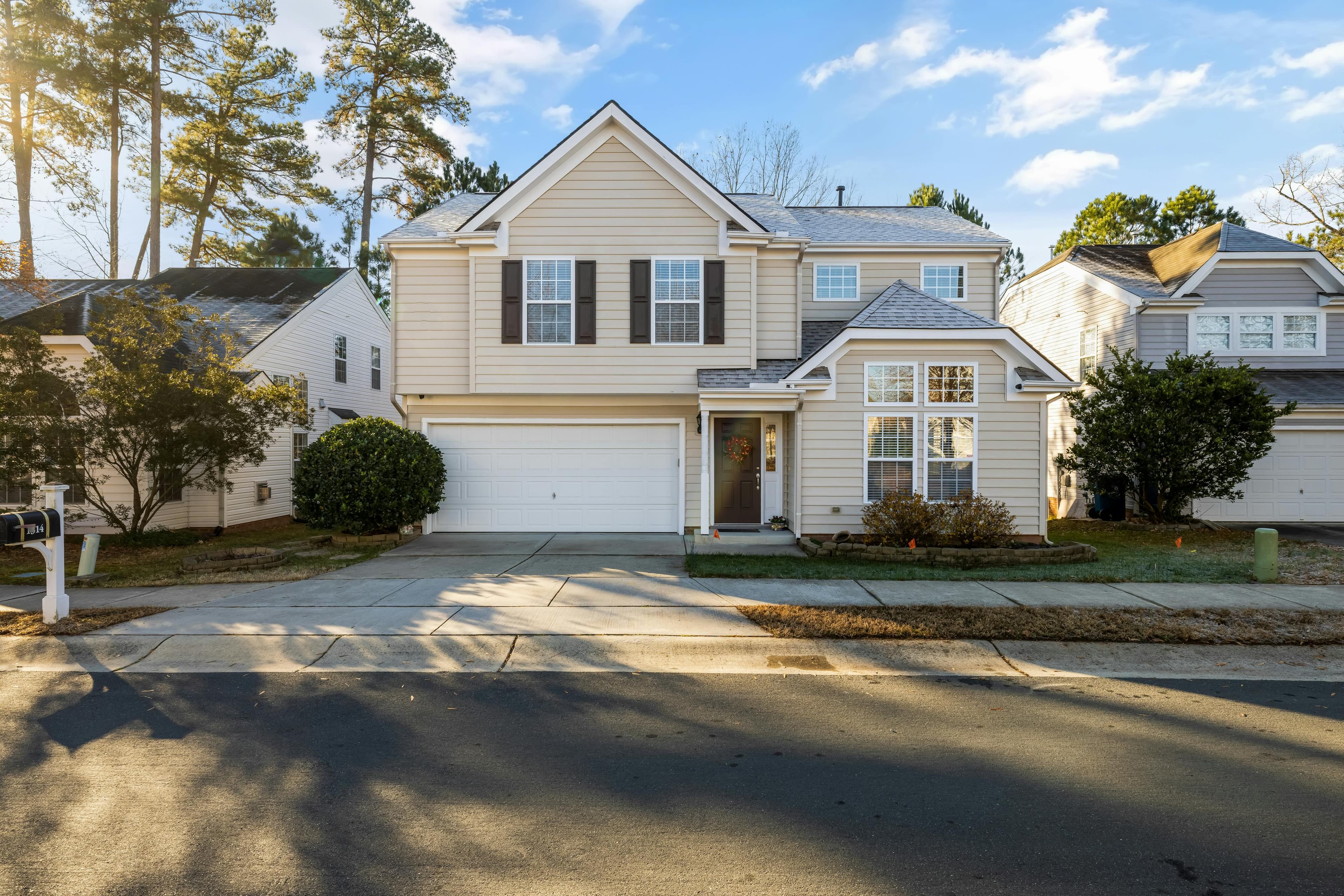


- The discount is real but smaller than you fear: published hedonic studies put the hit near 0.5% of value for each decibel of extra noise, which usually lands a busy-road home in the mid single digits to low double digits, not a 30% collapse.
- Distance and traffic volume drive the number: one large study found roughly an 8% discount for lots fronting a high-traffic street, shrinking fast as you move away from the noise.
- Disclose what you know, not what buyers can see: most states require disclosing known material problems, but an obvious highway or rail line a buyer can plainly observe is usually not a hidden defect.
- Over-investing in soundproofing rarely pays back: a fair price that reflects the discount almost always beats spending tens of thousands chasing silence.
- The right buyer self-selects: plenty of buyers trade road or rail noise for a lower price, a bigger lot, or a shorter commute, so your job is to reach them, not to convince everyone.
How much does living near a highway actually lower home value?
Start with the honest news: the penalty is real, but it is usually a discount, not a disqualification. Economists measure this with hedonic pricing, which isolates the price effect of one feature (noise) after controlling for size, condition, and location. Across decades of these studies the numbers cluster in a narrow band.
A 1982 meta-analysis summarized by the National Academies of Sciences found that 17 hedonic pricing estimates produced a range of noise depreciation index values of 0.16 to 0.63 percent, with a mean value of 0.40 percent per decibel. Later reviews landed in the same neighborhood. A meta-analysis of U.S. transportation-noise studies found the cumulative noise discount in the U.S. is about 0.5% to 0.6% per decibel at noise exposure levels of 75 dB or less, and the OECD depreciation index most planners use assumes roughly half a percent of value per decibel above 50 dB.
Translate that into your driveway. A home that backs directly to an interstate can sit 15 to 25 decibels louder than a quiet interior street. At half a percent per decibel, that is a discount in the range of roughly 8% to 12%. One large U.S. transaction study captured the same order of magnitude a different way: parcels fronting or adjacent to a high-traffic street sold on average at an 8.1% discount compared to similar parcels not so situated, and a doubling of traffic volume reduced selling price by an average of 2.1%. Another study that pooled planes, trains, and automobiles found the impact of traffic noise ranges to 12 percent, with an average of about 5 percent.
The takeaway: plan for a single-digit to low-double-digit discount, not a fire sale. The number you actually get is set by how loud, how close, and how visible the nuisance is from the yard and the main living spaces.
The Federal Highway Administration has long acknowledged the link while being careful about claiming certainty. In its guidance on the audible landscape, FHWA notes that property values have been the area of greatest concern because this is where financial impacts are most immediately felt and clearly distinguishable, and that while studies have not provided conclusive evidence, there are strong indications that highway noise reduces property values when the property use is incompatible with the highway, as in many residential areas. You can read the agency's summary on its highway noise and economics page.
Estimate your proximity discount
Use the reference tool below to turn those study ranges into a starting dollar figure for your home. It is a conversation starter for pricing, not an appraisal. Feed the output into a real comparative market analysis, and if you want to understand what that document is telling you, read our guide on how to read a comparative market analysis.
Proximity Price-Adjustment Reference Tool
Enter what a comparable home away from the noise would sell for, how far your home sits from the nuisance, and the type of nuisance. The tool returns a typical discount range drawn from published hedonic pricing studies.
Type "highway," "rail," or "commercial." Rail with active horns skews slightly higher, a quiet commercial neighbor slightly lower. Estimate for education only, not an appraisal or valuation.

Highway, railroad, or commercial: how the discount differs
Buyers do not react to all three nuisances the same way. The distinctions matter for pricing and for the story you tell in the listing.
| Nuisance | What buyers react to | What can help your case |
|---|---|---|
| Highway or busy road | Constant background drone, worse in warm months with windows open; headlights; exhaust | Existing sound wall, mature tree buffer, home oriented away from the road |
| Railroad | Intermittent but loud events; vibration; crossing horns at all hours | Location inside a quiet zone; distance from a grade crossing; freight vs. passenger frequency |
| Commercial or industrial lot | Traffic, delivery trucks, lighting, dumpsters, hours of operation, resale uncertainty | Screening fence or landscaping; a quiet, low-traffic tenant; zoning that limits future use |
Railroads deserve special attention because the noise is spiky, not steady, and the horn is federally governed. Under the Federal Railroad Administration's rule, train horns must operate at a maximum volume of 110 decibels and a minimum volume of 96 decibels, and that floor exists on purpose because the horn is a safety device. The one thing that can genuinely quiet a corridor is a quiet zone. As the FRA explains on its Train Horn Rule and Quiet Zones page, communities can designate segments where train horns would not be routinely sounded, provided they meet certain safety requirements. The catch for a seller: only a public authority, such as a city or county, may establish quiet zones, so this is not something you can arrange yourself before listing. If you are already in a quiet zone, say so, because it is a genuine value point. If the neighbor problem is a person rather than a place, our guide to selling a house with a difficult neighbor covers the disclosure wrinkles.

Price a location-challenged home with data, not guesswork
A top local agent has sold homes on your street and knows exactly what the noise discount runs in your market. That is worth far more than a soundproofing quote.
Match with a top listing agentWhat you must disclose about noise and nuisances
Sellers often overthink this. The general rule across most of the country is that you disclose what you actually know, and you are not on the hook for conditions a buyer can plainly observe.
The baseline is broad. Every state except a handful of "caveat emptor" states requires sellers to disclose known material defects, and federal law mandates lead paint disclosure for homes built before 1978. Common disclosure categories include structural issues, water damage, roof condition, pest infestations, environmental hazards, and known neighborhood nuisances. Importantly for your situation, the standard is knowledge, not investigation: you are only required to disclose what you actually know, and sellers are not obligated to hire inspectors or investigate potential problems they are unaware of.
Where does an obvious highway fit? Most disclosure law separates hidden (latent) problems from open (patent) ones. A latent defect is a hidden problem not visible during a normal inspection; a patent defect is open and obvious to any reasonable buyer during a walkthrough. Sellers are required to disclose latent defects in nearly every state, while patent defects are generally considered buyer-aware conditions, and the seller has no legal duty to disclose what a buyer could have seen with their own eyes. A four-lane highway behind the fence is about as patent as it gets.
That said, do not get cute. Some conditions are known to you but not obvious on a sunny midday tour: the 2 a.m. freight schedule, the seasonal odor from a nearby plant, a commercial tenant's early delivery trucks. Guidance in disclosure-heavy states is explicit that a constant, significant nuisance like extreme noise that affects the property's value may need to be disclosed. States vary widely here, and a few, including Alabama and Arkansas, traditionally operated under caveat emptor principles with fewer mandated disclosures, though even those states have narrowed that protection over time. When you are unsure, disclose. It is cheaper than a lawsuit, and it protects your deal from falling apart late. For the state-by-state picture, see our breakdown of what sellers must disclose by state and category.
- Hiding a non-obvious pattern. Nighttime train horns or a plant's shift-change traffic are not visible at a noon showing. Silence here looks like concealment later.
- Timing showings only for quiet windows. Scheduling every tour for a Sunday morning to dodge rush-hour traffic can backfire when a buyer visits on their own and feels misled.
- Guessing about future development. If a vacant commercial lot next door could be rezoned or built up, do not speculate on the form. Point buyers to the local planning office instead.
Mitigations that help, and the ones that waste money
Here is where sellers pour money down the drain. The instinct is to buy your way to silence. The data says price usually does more work than construction. Think of each option in terms of whether it changes a buyer's first impression at a reasonable cost.
Landscaping and fencing (best value)
A solid fence plus dense evergreen plantings will not slash decibels dramatically, but it blocks the sight line and softens the perception of noise, which is what buyers actually respond to. It is the cheapest lever with the highest emotional payoff.
Targeted window upgrades (situational)
Laminated or acoustic glass in the rooms facing the noise can meaningfully cut indoor sound. Replacing every window in the house to chase a few extra decibels rarely returns its cost. Focus on the bedrooms and the main living space that face the nuisance.
Outdoor living redirection (smart staging)
Stage the patio, garden, and seating on the quiet side of the lot. Show buyers where they will actually relax. This costs almost nothing and reframes the whole property.
A private sound wall (usually overkill)
A tall masonry barrier can cost tens of thousands and seldom returns it dollar for dollar. FHWA-scale barriers exist because agencies weigh cost against benefit carefully, and a homeowner rarely wins that math. If a public barrier already exists, promote it. Building your own is usually the wrong call.
This is the same repair-versus-discount logic that governs any flawed listing. Before you sink money into mitigation, run the honest comparison in our guide to repair ROI versus as-is discounts. In most noise cases, a buyer would rather bank the price cut and spend it on their own priorities than pay a premium for your soundproofing choices.
Rule of thumb: spend on perception (fence, plantings, staging the quiet side) before you spend on physics (walls, whole-house glass). Perception is cheaper and moves buyers more.
Price it right and target the buyer who wants this location
The biggest mistake is not the location. It is listing as if the location were invisible, sitting through weeks of no offers, and then chasing the market down with a string of reductions. Buyers read a stale listing as a problem, and every price cut signals weakness. Price to the discount from day one and you compete from strength.
Scenario: the interstate-adjacent ranch
A three-bedroom home backs to a freeway. Comparable interior-street homes sell around $400,000. The agent prices at $360,000, a roughly 10% discount consistent with the hedonic data, stages the fenced backyard on the quiet side, and markets to commuters who value the on-ramp two minutes away. It sells in three weeks with one modest concession. The neighbor who listed at $398,000 "to leave room" sat for two months and eventually sold for less after two cuts.
Notice who bought it: a commuter who valued fast highway access. That is the point sellers miss. Buyers self-select for busy locations far more than owners assume. Investors, first-time buyers stretching a budget, and people who want a bigger lot or a shorter drive will trade noise for value all day. Your marketing job is to reach that pool, not to win over the buyer who was never going to consider it. Lean into the genuine upsides: the price, the lot size, the location, the access.
Finally, respect the clock. If offers are not coming, the answer is a decisive correction, not a slow drip. Our data-backed timeline for price reductions shows why one meaningful cut beats several timid ones. Better still, price it correctly at launch so you never need the reduction.
Reach the buyers who actually want this location
The right agent targets commuters, investors, and value hunters instead of hoping the average buyer looks past the noise. We match you with local agents ranked on real sales performance.
Find a top agent near youFrequently asked questions
How much less is a house near a highway worth?
Published hedonic studies suggest value falls roughly 0.5% for each added decibel of noise, and one large study found about an 8% discount for lots fronting a high-traffic street. For most highway-adjacent homes that works out to a single-digit to low-double-digit percentage discount, driven mainly by distance, traffic volume, and how visible the road is from the home.
Do I have to disclose that my house is next to a railroad?
You must disclose known material facts, but an obvious rail line a buyer can plainly see is generally treated as an open condition rather than a hidden defect. What you should disclose is anything known to you that is not obvious on a normal tour, such as frequent overnight train horns or vibration. Rules vary by state, so when in doubt, disclose in writing.
Will soundproofing recover its cost when I sell?
Rarely in full. Targeted window upgrades in the rooms facing the noise and a fence with dense landscaping give the best return because they change the buyer's perception cheaply. A private masonry sound wall can cost tens of thousands and seldom returns it. For most sellers, a fair price beats an expensive soundproofing project.
Can I get the train horns near my house silenced before selling?
Not on your own. Under the Federal Railroad Administration's rule, horns must sound between 96 and 110 decibels for safety, and only a public authority such as a city or county can establish a quiet zone after installing required crossing safety measures. If your home already sits in an established quiet zone, promote it as a real value point.
Is a commercial neighbor worse than a highway for resale?
It depends on the tenant and the zoning. A quiet office with weekday hours may bother buyers less than a freeway, while a lot with truck traffic, bright lighting, or uncertain future use can weigh more. Buyers also worry about what could be built later, so pointing them to local zoning limits often reduces the perceived risk.
Should I price high to leave room for negotiation?
Usually no. Overpricing a location-challenged home tends to produce a stale listing and a string of price cuts that signal weakness. Pricing to the discount from day one attracts the buyers who want the location and lets you negotiate from strength rather than desperation.
Who actually buys homes near highways, rail lines, or commercial lots?
Commuters who value fast access, investors chasing yield, first-time buyers stretching a budget, and people who want a larger lot for the money. These buyers trade noise for price, which is why targeting them directly matters more than trying to win over buyers who would never consider the location.
Does a noisy location make a home take longer to sell?
Some research suggests noise does not necessarily increase time on the market when a home is priced correctly. The homes that linger are usually the ones priced as if the noise did not exist. Accurate pricing and marketing to the right buyer pool are what keep days on market reasonable.
The honest bottom line
A highway, rail corridor, or commercial lot behind your home is a price problem, not a dead end. The research is consistent: expect a discount in the single digits to low double digits, set mostly by how close and how loud the nuisance is. Disclose what you genuinely know, skip the expensive soundproofing that will not pay you back, and spend your energy on perception and pricing instead. Reach the commuters, investors, and value buyers who want exactly what you are selling, price to the discount on day one, and you will sell without leaving money on the table chasing a silence buyers were never going to pay for.
Disclaimer: This article is for informational purposes only and should not be considered financial, investment, or legal advice. Figures are drawn from the Federal Highway Administration, the Federal Railroad Administration, the National Academies of Sciences, and published academic hedonic pricing studies, and can change over time; verify specifics with your agent, appraiser, and local disclosure rules. EffectiveAgents is a real estate agent matching service.