


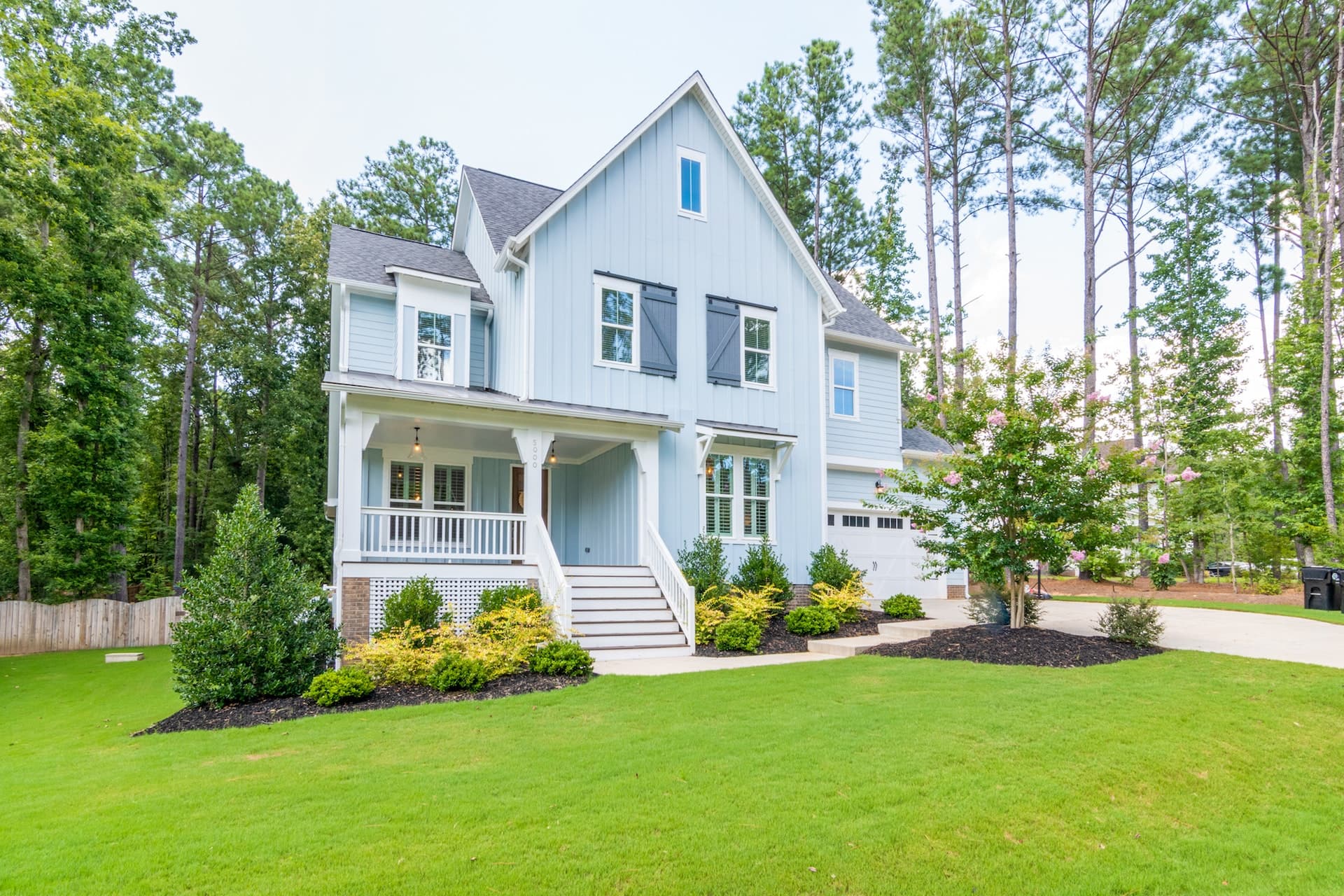
The Rent vs. Buy Decision: A Comprehensive Financial Analysis
The question of whether to rent or buy a home remains one of the most consequential financial decisions Americans face. With median home prices hovering around $425,000 and mortgage rates fluctuating between 6% and 7%, the calculus has become increasingly complex. This comprehensive analysis provides sophisticated tools and data-driven insights to help you make an informed decision based on your unique circumstances.
According to Federal Reserve data, homeowners have a median net worth of $400,000, compared to just $10,400 for renters. This staggering 38:1 wealth gap underscores the long-term wealth-building potential of homeownership. However, the path to homeownership requires careful analysis of upfront costs, market conditions, and your personal financial situation.
Ready to Make the Right Move?
A top-performing real estate agent can help you navigate the complexities of buying in today's market, potentially saving you thousands in the process.
Find a Top-Rated AgentCurrent Market Dynamics
The housing market has undergone significant shifts. According to recent Bankrate research, the average monthly mortgage payment for a median-priced home in the U.S. is approximately $2,768 (including property taxes and homeowners insurance), while the average national monthly rent sits around $2,000. This represents a 38% premium for buying over renting in the short term.
However, this surface-level comparison misses critical factors that influence the long-term financial outcome:
Renting Costs
- Monthly rent payment
- Renters insurance ($15-30/month)
- Security deposit (refundable)
- Annual rent increases (avg. 3-5%)
- Application fees
- No maintenance responsibility
- No property tax burden
- Limited to no tax benefits
Buying Costs
- Principal and interest payment
- Property taxes (varies by location)
- Homeowners insurance
- PMI if under 20% down
- Maintenance (1-2% of value/year)
- HOA fees (if applicable)
- Closing costs (2-5% of price)
- Tax deductions available
The Regional Picture
The rent vs. buy equation varies dramatically by location. According to ATTOM data, homeownership costs consume a smaller portion of wages than three-bedroom rents in nearly 60% of U.S. counties. The Midwest and South offer the most favorable conditions for buyers, while West Coast markets like the Bay Area show renting as significantly more affordable in the short term.
Monthly Housing Cost Comparison by Region
Rent vs. Buy Scenario Calculator
Use this sophisticated calculator to analyze your specific situation across different economic scenarios. This tool factors in home appreciation, investment returns, inflation, equity accumulation, and tax benefits to provide a comprehensive 5, 10, and 15-year projection.
Long-Term Financial Analysis Calculator
Renting Total Cost (Net)
Buying Total Cost (Net)
| Time Horizon | Renting Net Cost | Buying Net Cost | Advantage |
|---|
Analysis Summary
Understanding the Inflation Scenarios
Low Inflation (2-3%): Moderate home appreciation (3-4%), stable rent growth, favorable for long-term buying.
Medium Inflation (3-4%): Stronger home appreciation (4-5%), accelerating rent increases, buying advantage grows faster.
High Inflation (5%+): Rapid home appreciation (6-8%), aggressive rent hikes, real estate serves as strong inflation hedge.
The Cost of Waiting Calculator
Many prospective buyers delay their purchase hoping for better market conditions. However, this strategy often backfires. Home prices have appreciated 17.6% since the beginning of 2022 despite mortgage rates doubling. This calculator reveals the true cost of waiting.
Cost of Waiting to Buy
Future Home Price
Additional Cost
| Factor | Buy Today | Buy Later | Difference |
|---|
The Bottom Line
The Wealth-Building Reality of Homeownership
Over the long term, homeownership has proven to be one of the most reliable paths to wealth accumulation for American families. According to historical data, U.S. home prices have increased approximately 4.3% per year since 1967, outpacing general inflation by about 0.3% annually.
Equity Accumulation Timeline
Years 1-5: Building Foundation
Early mortgage payments are interest-heavy, but you begin building equity. With 20% down on a $425,000 home, you start with $85,000 in equity. After 5 years with 4% annual appreciation, your equity could reach approximately $175,000.
Years 5-10: Accelerating Growth
More of each payment goes toward principal. Home value continues appreciating. At the 10-year mark, your equity position could exceed $300,000, combining mortgage paydown and appreciation.
Years 10-15: Substantial Wealth
The compounding effect becomes powerful. By year 15, you could have over $450,000 in equity. This wealth can be leveraged for retirement, education funding, or investment opportunities.
Years 15-30: Freedom and Flexibility
Approaching payoff, your housing costs drop dramatically. A fully paid home provides housing security and represents a substantial portion of retirement wealth for most Americans.
Start Building Equity Today
Top-performing agents help buyers find homes that maximize appreciation potential and negotiate prices that give you instant equity.
Get Expert GuidanceThe Break-Even Analysis
Understanding your break-even point is essential for making the rent vs. buy decision. This is the point at which the total cost of buying equals the total cost of renting, accounting for all factors.
The typical break-even period for buying vs. renting falls between 3 and 7 years, depending on local market conditions, down payment size, and mortgage rate. In high-appreciation markets, break-even can occur in as little as 2 years. In more stable markets with high property taxes, it may extend to 8-10 years.
Key Factors Affecting Break-Even
| Factor | Shortens Break-Even | Lengthens Break-Even |
|---|---|---|
| Home Appreciation Rate | Above 4% annually | Below 2% annually |
| Rent Growth Rate | Rapid increases (5%+ yearly) | Stable or declining rents |
| Closing Costs | Seller concessions or lower costs | High closing cost regions |
| Property Tax Rate | Low tax states (under 1%) | High tax states (over 2%) |
| Mortgage Rate | Below 5% | Above 7% |
| Down Payment | 20%+ (no PMI) | Under 10% (PMI required) |
Lifestyle Considerations Beyond the Numbers
While financial analysis is crucial, the rent vs. buy decision extends beyond spreadsheets. Your lifestyle, career trajectory, and personal preferences should factor heavily into this choice.
Renting May Be Better If:
You value flexibility and mobility for career opportunities. You are uncertain about your desired long-term location. You prefer to avoid maintenance responsibilities. Your savings are better deployed elsewhere for now. You are in a market where renting is significantly cheaper. You anticipate major life changes in the next 2-3 years.
Buying May Be Better If:
You plan to stay in the area for at least 5 years. Building equity and wealth is a priority. You want stability and protection from rent increases. You desire the freedom to customize your living space. You can comfortably afford the total monthly cost. You have adequate emergency savings beyond your down payment.
The Top-Performing Agent Advantage
Whether you decide to buy now or wait, working with a top-performing real estate agent can significantly impact your financial outcome. Data shows that top agents help buyers save an average of $55,000 to $65,000 compared to average agents or going it alone.
A skilled buyer's agent provides:
Top agents leverage market knowledge to identify homes with strong appreciation potential, negotiate favorable terms, and guide you through the complex buying process. Their expertise becomes especially valuable in competitive markets where strategic positioning can mean the difference between securing your ideal home and losing out.
Find Your Top-Performing Agent
EffectiveAgents connects you with agents ranked in the top 5% based on actual performance data, not referrals or advertising.
Get Matched NowFrequently Asked Questions
In the short term, renting is currently cheaper in most major U.S. metros, with average mortgage payments running about 38% higher than average rents. However, long-term analysis shows buying typically becomes more cost-effective after 3-7 years due to equity accumulation, home appreciation, and protection against rising rents. The answer depends heavily on your local market, time horizon, and personal financial situation.
Waiting for lower rates often backfires. Since 2022, home prices have appreciated 17.6% while buyers waited for rates to fall. If rates drop significantly, increased buyer demand typically pushes prices higher, potentially offsetting rate savings. Many experts recommend buying when you find the right home and can afford it, then refinancing later if rates decrease. Remember: you can refinance a rate but cannot renegotiate a purchase price.
Beyond your down payment (ideally 20% to avoid PMI, though loans are available with as little as 3% down), you should have 2-5% of the home price for closing costs, 3-6 months of expenses in an emergency fund, and reserves for immediate home needs. For a $400,000 home with 20% down, this means having approximately $100,000-$120,000 in total savings for a comfortable purchase.
The 5-year rule suggests you should plan to stay in a home for at least five years to recoup closing costs, transaction fees, and early mortgage interest. In the first years, most of your payment goes toward interest rather than building equity. Selling too soon often results in breaking even or losing money after accounting for all transaction costs (typically 8-10% of sale price including agent commissions and closing costs).
Historically, home prices have appreciated about 4.3% annually, slightly above inflation. However, a primary residence should primarily be viewed as forced savings and lifestyle security rather than a pure investment. The real financial benefit comes from the leverage (controlling a large asset with a relatively small down payment), tax advantages, and protection against rising housing costs. Compared to stocks, real estate offers lower volatility but also typically lower returns when accounting for all ownership costs.
Inflation generally favors homeowners significantly. A fixed-rate mortgage locks in your principal and interest payment, while rents typically increase with inflation (often 3-5% annually). During high inflation periods, home values also tend to appreciate faster, building equity more quickly. Real estate has historically served as an effective inflation hedge, with total U.S. home equity exceeding $35 trillion according to Federal Reserve data.
Beyond mortgage payments, homeowners face property taxes (average 1.1% of home value), homeowners insurance (average $1,800 annually), maintenance and repairs (budget 1-2% of home value per year), HOA fees (if applicable), utilities (often higher than apartments), and PMI if your down payment is below 20%. These costs typically add $500-$1,000+ to monthly housing expenses beyond the base mortgage payment.
Yes, though with limitations. FHA loans accept scores as low as 500 with 10% down, or 580 with 3.5% down. VA and USDA loans have no minimum scores set by the programs (though lenders set their own). However, lower credit scores mean higher interest rates, increasing your total cost significantly. Improving your credit before buying can save tens of thousands over the life of your loan. Consider working with a mortgage professional to understand your options.
Making Your Decision
The rent vs. buy decision is deeply personal and depends on your financial situation, lifestyle preferences, and market conditions. Use the calculators above to model your specific scenario, but remember that the numbers tell only part of the story.
For most Americans planning to stay in one location for five or more years, buying remains the superior long-term financial strategy. The wealth gap between homeowners ($400,000 median net worth) and renters ($10,400) reflects decades of data showing homeownership's role in building financial security.
However, if you need flexibility, are not financially prepared for homeownership's responsibilities, or live in a market where buying costs far exceed renting, there is no shame in continuing to rent while building your savings and waiting for the right opportunity.
Whatever you decide, partnering with a top-performing real estate professional can help you navigate your next steps, whether that means finding the perfect home to buy or understanding what you need to do to prepare for future homeownership.